Loading...
Serving Springfield, VA and surrounding areas. (571) 788-4608
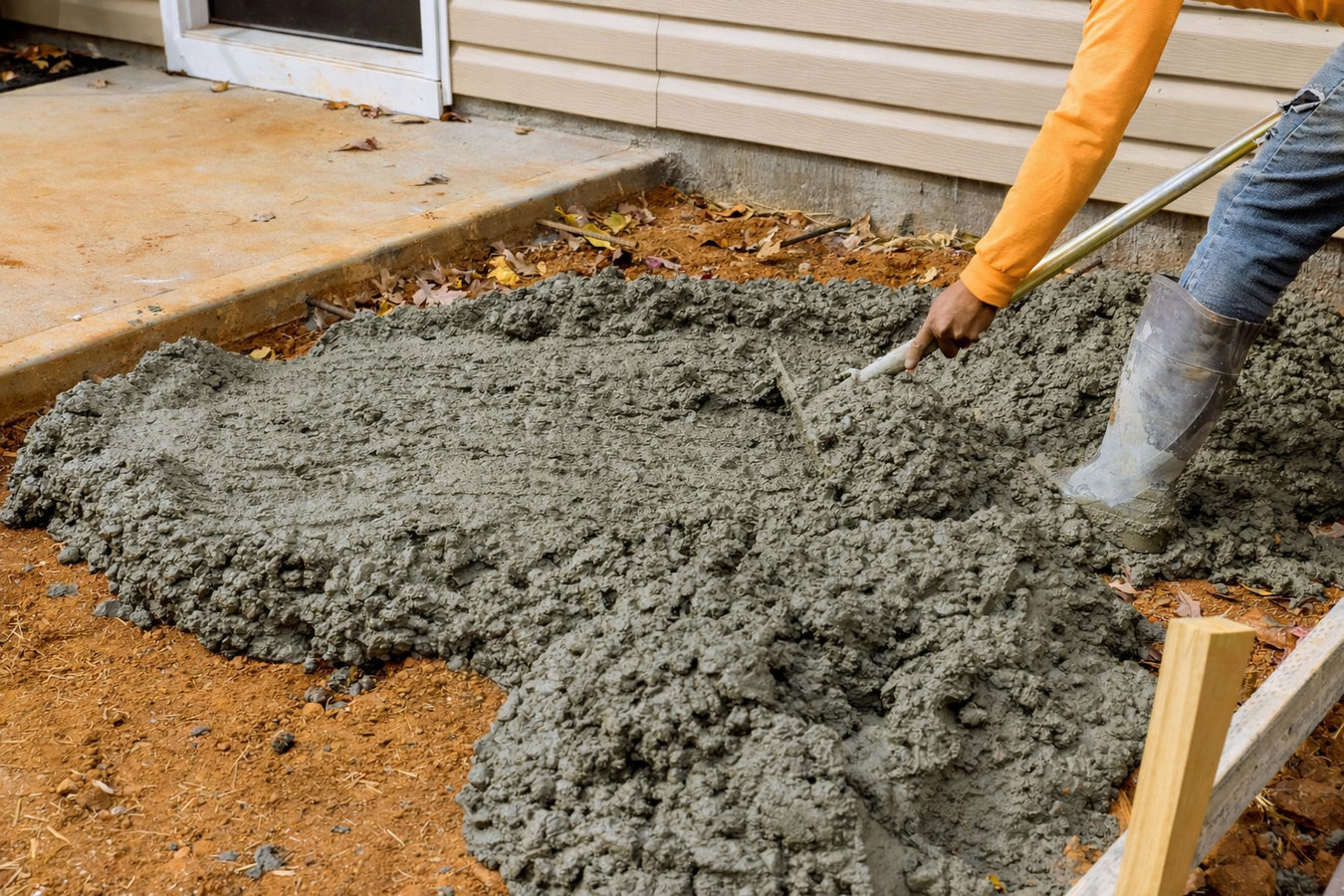
A sunken slab directs water toward your home and creates a trip hazard at your door. We lift it back to level, patch the holes, and have you walking on it the same day - no tearout, no waiting.
Foundation raising in Springfield, VA is the process of lifting a sunken concrete slab back to its original level by pumping material beneath it to fill the void below - most residential jobs are completed in a single visit, and the surface is usable the same day.
The concrete itself is usually fine. What gives out is the soil underneath. Springfield sits on clay-heavy Fairfax County soil that swells when wet, shrinks when dry, and slowly pulls away from the underside of slabs over years of seasonal cycling. When that void opens up, the slab sinks, tilts, and starts sending water the wrong direction. Foundation raising fills the void and lifts the slab back - without tearing anything out, without a week of curing, and at roughly one-third to one-half the cost of full replacement.
If you are also dealing with a foundation that needs structural support rather than just lifting, we handle that separately through our slab foundation building service, which covers new pours and major structural work.
If a section of your sidewalk, patio, or garage floor shifts slightly underfoot, the soil has pulled away and left a void. That void grows with every rain and every freeze-thaw cycle in Springfield's winter. The longer it goes unaddressed, the deeper the slab will eventually drop.
A visible gap between your front stoop and the house foundation, or between your driveway and the garage floor, means the slab has dropped relative to what sits next to it. In Springfield's clay soil this kind of differential settling tends to get worse each year, and even a half-inch gap is worth having evaluated.
If rainwater collects next to your home rather than draining away from it, a sunken slab or settled walkway may be sending water the wrong direction. Northern Virginia averages around 40 inches of rainfall per year, and any surface sloping toward your foundation raises your risk of basement or crawl space water intrusion.
If you step down to get onto your front stoop, or there is a visible drop from your door frame to the concrete below, the stoop has settled. This is common in Springfield homes built in the 1960s and 1970s, where stoops were often poured separately from the foundation and have had decades to move on their own.
We raise sunken concrete slabs throughout Fairfax County using two proven methods: polyurethane foam injection and traditional mudjacking. Foam injection pumps a lightweight, fast-expanding foam beneath the slab through small holes - it cures in about 15 minutes and you can walk on the surface almost immediately. Mudjacking pumps a cement-and-soil slurry instead, which takes 24 to 48 hours to set but handles large voids well and costs less per hole. We recommend one method over the other based on the size of the void, the weight and condition of the slab, and what the soil conditions look like. Either way, the drill holes are patched when the lift is complete and the surface is left clean.
Most of the slabs we lift are stoops, front walkways, driveways, patio sections, or garage aprons - concrete surfaces that have been in place for decades and have simply dropped as the soil shifted beneath them. When the scope of work grows beyond a single slab, we can connect it with our concrete cutting service if damaged sections need to be removed before the surrounding area is raised. For projects that involve starting fresh with a new slab instead of lifting an existing one, our slab foundation building service covers new pours of any size.
Best for homeowners who need fast results - surface is walkable within minutes and drivable the same day.
Best for large voids or heavy slabs where a high-density fill material is the right match for the job.
Best for homes where the front entry has settled and is directing water toward the house or creating a trip hazard.
Best for driveways that have dropped at the garage edge or sections that have tilted and cracked along one side.
Springfield and the surrounding Fairfax County area are built on expansive clay soils that behave differently from sand or gravel. Clay absorbs moisture and swells, then dries out and shrinks - repeatedly, every season. That constant movement is the primary reason slabs settle here, and it is why a foundation raising job in Springfield requires a contractor who understands what is happening below the surface, not just what is visible above it. Addressing the slab without accounting for drainage and grading near it is a short-term fix in this soil type. We point out any contributing factors - downspouts discharging near the slab, negative grade toward the house - so the repair has the best chance of lasting. Homeowners in Burke deal with the same clay soil conditions and see the same patterns of differential settling.
A large share of Springfield's housing stock was built between the 1950s and 1980s, which means many slabs in the area have had 40 to 70 years to move. Older slabs from that era were often placed on soil that was not compacted to today's standards. The good news is that concrete from that period is frequently still structurally sound - it just needs to be lifted back to where it belongs. If you live in one of Springfield's HOA communities - common in neighborhoods built from the 1970s onward - check with your association before scheduling any exterior work, since some have guidelines about the appearance of repaired concrete on driveways or front walkways that are visible from the street. Homeowners in Annandale face similar HOA considerations, and we are familiar with those community processes.
Tell us what is sinking, roughly how much it has dropped, and whether you have noticed any water pooling nearby. We respond within one business day and will schedule a visit to see the slab in person - no honest estimate can be given over the phone.
We walk the area with you, check how much the slab has dropped, look at the condition of the concrete, and assess the soil and drainage situation around it. We tell you whether raising is the right call or whether replacement makes more sense - and why.
Depending on the scope, we check whether a Fairfax County permit is needed before work begins. If one is required, we handle the application - you just need to be aware it may add a few days to the timeline. Once any approvals are in place, we schedule the work day.
The crew drills small holes through the slab, pumps material beneath it until it rises back to level, then patches the holes with concrete filler. For foam injection, the surface is walkable within 30 minutes. For mudjacking, plan to stay off it until the next day.
We serve Springfield and all of Fairfax County. Most jobs are scheduled within days, and we respond to every inquiry within one business day.
(571) 788-4608Most of the foundation raising calls we get in Springfield come down to the same thing: clay soil that has shifted beneath a slab. We assess the drainage and grading around every slab we lift, not just the slab itself, so the repair addresses the underlying cause rather than just the symptom.
Not every sunken slab is a candidate for lifting. If the concrete is cracked into pieces or structurally compromised, we will tell you that before any work begins and explain why replacement is the smarter investment. You will never be sold a raise on a slab that needs to come out.
We know which slab-lifting jobs in Fairfax County require a permit and which do not. When a permit is needed, we handle the application and coordinate the county review - you do not need to navigate that process yourself. A contractor who skips permits to save time is a liability, not a convenience.
Virginia contractors performing structural work on residential properties are required to hold a valid contractor license through the state. You can verify any contractor's status on the Virginia DPOR website before you hire. We carry general liability and workers compensation coverage - ask for proof of both before signing with anyone.
Foundation raising is a job where the difference between a contractor who knows this area and one who does not shows up clearly - in how long the repair lasts and whether the contributing factors get addressed. We have worked on the older housing stock across Springfield and Fairfax County long enough to recognize the patterns. For more on licensing standards for concrete work in Virginia, the Virginia Department of Professional and Occupational Regulation maintains a public license lookup. The Concrete Foundations Association is the primary trade body for foundation contractors and sets the professional standards we follow.
Remove damaged or unwanted concrete sections cleanly before surrounding slabs are raised or replaced.
Learn MorePour a new concrete slab when an existing one is too damaged to raise and needs to be replaced entirely.
Learn MoreEvery freeze-thaw cycle in Northern Virginia expands the void beneath a settling slab. Call us now to schedule your foundation raising - most jobs are completed in a single visit.