Loading...
Serving Springfield, VA and surrounding areas. (571) 788-4608
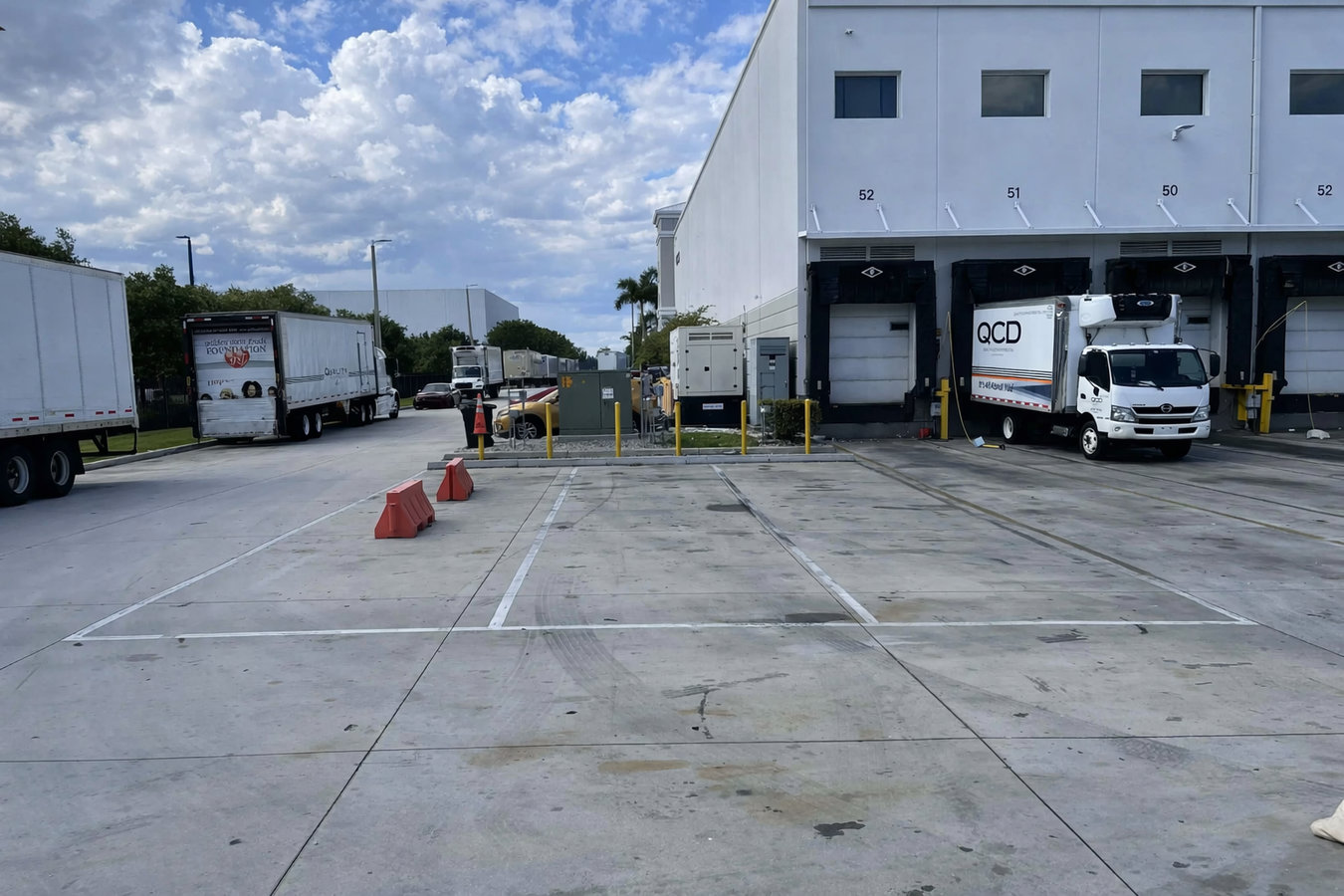
Cracked asphalt, mud, and standing water cost you every season. We build reinforced concrete lots that drain properly, hold up through Northern Virginia winters, and stay solid for decades.
Concrete parking lot building in Springfield, VA involves site clearing, grading, a compacted gravel base, steel-reinforced concrete, expansion joints, and Fairfax County permit coordination. Most small commercial or residential lots - ten to twenty spaces - take two to five days of active work, with at least seven days before vehicles can use the surface.
If you are dealing with a lot that cracks every spring, pools water after every summer storm, or is still unpaved gravel and mud, you already know the cost of putting this off. Springfield sees heavy spring and summer rains, and Fairfax County's clay-heavy soil shifts enough with moisture changes to ruin a poorly built slab within a few seasons. A properly built concrete lot solves all of that at once.
If your project includes areas where the ground needs to be secured against erosion or grade changes at lot edges, our concrete footings service can be coordinated alongside the lot work to handle structural anchoring in the same project.
If cracks are spreading in multiple directions - sometimes called alligator or map cracking - the base underneath has weakened or shifted. In Springfield's clay-heavy soil, this often happens when the ground swells and shrinks with seasonal moisture changes. Once cracking reaches this stage, patching rarely holds, and a full replacement is usually the more cost-effective path.
If puddles sit on your parking area for hours after rain, the surface has settled unevenly or was never graded correctly. This is a common problem in Springfield, where heavy summer thunderstorms can drop several inches of rain quickly. Standing water accelerates surface damage and creates a slip hazard - both good reasons to act before the problem compounds.
Edges and drainage points are where a failing parking surface shows its age first. If you see chunks breaking off, deep potholes near drains, or crumbling pavement edges, the structural integrity of the slab is gone. These are not cosmetic issues - they are signs the surface can no longer safely support vehicle traffic.
If your parking area is currently gravel, dirt, or a mix, you are probably dealing with mud in wet weather, dust in dry weather, and ongoing erosion. Northern Virginia's wet springs and dry summers make unpaved lots hard to maintain. A concrete surface solves all three problems and requires almost no ongoing maintenance.
We handle full concrete parking lot builds for residential properties, small commercial sites, and multi-use properties throughout Fairfax County. Every project starts with the base - proper excavation, removal of any old surface material, and a compacted gravel layer that gives the concrete something solid to rest on regardless of what the clay soil underneath is doing. Steel reinforcement goes into every slab we pour, which is the difference between a lot that cracks randomly and one that stays together if the ground shifts slightly. For lots that require Fairfax County land disturbance permits or stormwater drainage features, we manage the permit application and coordinate drainage design so that your project meets county rules from day one. Our concrete driveway building work uses the same base-prep and reinforcement methods if your project includes private driveway sections alongside a parking area.
Finish options include standard broom finish - practical, durable, and safe in wet conditions - as well as heavier-texture finishes for high-traffic areas that need extra grip. Expansion joints are cut at the right intervals to give the concrete room to move with temperature changes without cracking randomly. After the slab cures, we can coordinate striping, wheel stops, and any accessibility features the site requires. Every lot we build is graded to shed water off the surface and away from structures, which matters in Springfield where summer storms regularly test drainage on paved areas.
Best for properties converting from gravel, dirt, or unpaved areas that need a permanent, low-maintenance surface.
Best for sites where the existing asphalt or concrete has failed at the base level and patching is no longer a viable option.
Best for projects in Fairfax County that require a land disturbance permit, stormwater management features, or site plan review.
Best for commercial or multi-use sites that need parking space markings, accessible parking layout, and wheel stops after the slab cures.
Springfield sits in a climate zone where winter temperatures regularly swing above and below freezing in the same week. That freeze-thaw pattern is one of the main reasons parking lots in this area crack faster than they should. A concrete mix that is not designed for this range, or expansion joints that are spaced too far apart, will show problems within a few seasons. Fairfax County is also part of the Chesapeake Bay watershed cleanup program, which means the county has specific stormwater rules that apply to paving projects - rules that can require drainage features like bioretention areas or underground systems if your project increases the total paved surface area on your property. A contractor who works regularly in this area will know these rules before they start pricing your job, not after. Homeowners and property managers in Chantilly and Centreville face the same soil and stormwater conditions as Springfield, and we serve those areas as well.
Springfield is also a high-demand construction market. Quality concrete contractors book weeks or months in advance, especially in spring and fall - the best seasons for concrete work here. The clay-heavy soil that runs through most of Northern Virginia requires deeper excavation than you might expect and a thicker gravel base before the concrete goes down. Contractors who underbid this step are often the same ones whose lots start showing problems within the first few years. Getting at least three written quotes and asking each contractor specifically about their base-prep depth and clay soil experience will tell you a lot about how the finished lot will perform. Fairfax County's stormwater management requirements are publicly available and worth reading before your first contractor conversation.
We schedule a visit to your property - usually within one business day of your call - to measure the area, assess drainage, and look at the existing surface. You receive a written estimate that breaks out site prep, materials, drainage work, and any permit fees with no obligation to move forward.
For most Fairfax County parking lot projects, we handle the land disturbance permit application on your behalf. We also flag any stormwater drainage requirements early so those features are included in the original budget rather than added as a surprise later. Permit review typically takes two to four weeks.
Once permits are in hand, the crew clears the site, grades for drainage, and compacts the gravel base - usually one to two days. The concrete pour follows, with expansion joints cut the same day or the day after. Most residential or small commercial lots are poured in a single day.
Vehicles stay off the surface for at least seven days. Once cured, we do a final walkthrough with you to check the surface, edges, and drainage. If the project required a county inspection, that happens at this stage. Striping and wheel stops are added last, and the lot is ready to use.
We respond within one business day, handle all Fairfax County permitting, and give you a written estimate with no pressure to commit.
(571) 788-4608We manage the land disturbance permit application, stormwater review, and county inspector coordination on every project. You never have to visit a government office or wonder whether your lot meets local requirements - we build that into the job from day one.
Most of Northern Virginia sits on expansive clay that shifts with moisture. We excavate to the right depth and bring in compacted gravel before any concrete goes down - the same standard we apply across Fairfax County, where skipping this step is the main reason lots fail early.
Springfield winters put real stress on concrete. We use a mix designed for Northern Virginia's temperature range and space expansion joints to give the slab room to move without cracking randomly. The American Concrete Institute sets the standards we follow for concrete mix design in freeze-thaw climates.
Our quotes break out site prep, materials, drainage, and permit fees separately so you can see exactly what you are paying for. If drainage requirements change after permit review, we tell you before work starts - not after the bill arrives.
Every parking lot we build in Springfield is backed by the same base-prep standard, permit process, and walkthrough at the end. If you have questions before you are ready to commit, call us - we are happy to talk through what your site needs with no obligation. Virginia DPOR makes it easy to verify any contractor's license status before you sign anything.
Structural concrete footings for decks, additions, and outbuildings - dug below Springfield's frost line and inspected by Fairfax County before the pour.
Learn MoreReinforced concrete driveways built for Fairfax County's clay soil and freeze-thaw winters - using the same base-prep and mix standards as our parking lot work.
Learn MoreContact us today for a written estimate. We handle Fairfax County permits, stormwater coordination, and every step from site prep to final walkthrough.